
Is carbon fiber fabrication the same as manufacturing carbon fibers?
No. Fiber production creates reinforcement through a separate industrial process. Composite fabrication combines reinforcement with a matrix and forms a part or assembly.
Carbon fiber fabrication combines reinforcement, matrix, forming, consolidation, joining and finishing decisions around a specific part. The sourcing job starts with function, laminate intent, geometry, interfaces and acceptance—not with a preferred molding label.
CFRPWorks presents this page as an initial specification guide for fabrication enquiries—not as an independently verified list of factory processes. A specific layup, molding, cure or assembly route must be confirmed against the approved drawing and project response.
Custom Manufacturing Overview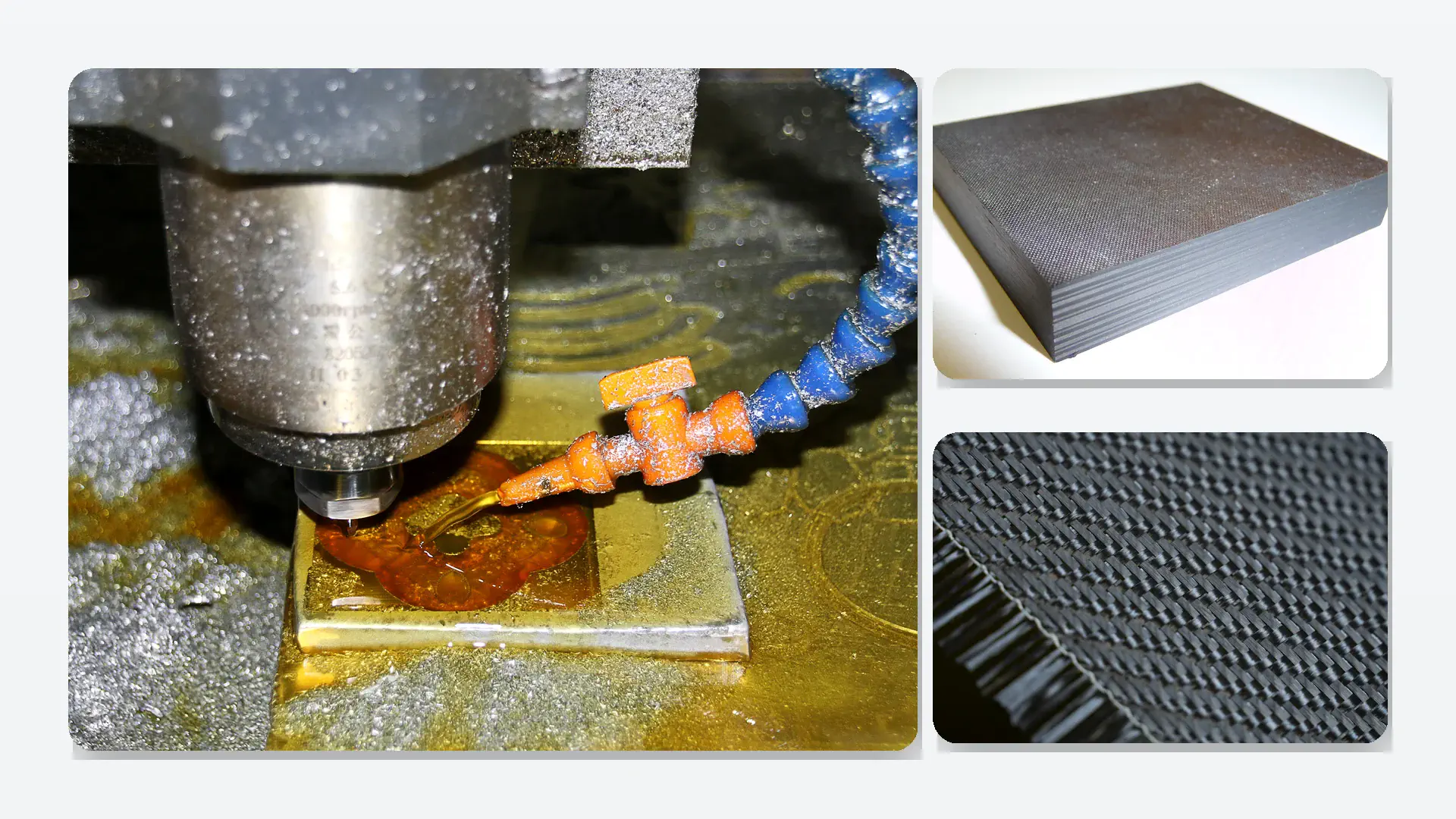
Factory-supplied workshop context. The image does not, by itself, prove a particular composite process, material system, capacity or qualification.
A useful enquiry separates fixed engineering requirements from choices still under review. That keeps a process proposal from quietly becoming the design authority.
State the part’s purpose, mechanical and environmental exposure, structural versus cosmetic requirements, nominal shape, target mass if applicable, and dimensional acceptance.
Identify mating surfaces, holes, datums, attachments and controlled material construction. Visible weave is an appearance choice; it is not a laminate certificate.
Record who can approve geometry, laminate, tooling or process changes. A metal-to-composite conversion may need different wall geometry, joints, fillets or reinforcement paths.
Layup, prepreg consolidation, infusion, closed-mold transfer and compression molding are different industry approaches—not a menu of guaranteed CFRPWorks equipment. The drawing and acceptance plan determine what must be evaluated and verified.
Thin shell with one visible face
How will fiber drape, trapped air and the cosmetic surface be managed?
Layup/cure plan and accepted appearance zone
Enclosed or complex multi-face shape
Which tool split, core or demolding approach is realistic?
Tooling concept and accessible inspection/repair areas
Thick laminate or local load-bearing attachment
Is reinforcement placement and through-thickness quality controlled?
Approved stack or qualification sample with defect acceptance
Sandwich panel with a core
How are core continuity, inserts and open edges controlled?
Section/detail drawings and bondline acceptance
Repeated identical components
Which tooling investment and process control are appropriate to volume?
Per-revision process ownership and first-article plan
Highly contoured assembly
What is fabricated in the mold, and what is joined or machined later?
Assembly/interface map and operation ownership
The appropriate route is not established by the material name alone. Confirm which facility or subcontractor performs each step, and how the proposed laminate, finish and inspection requirements are substantiated.
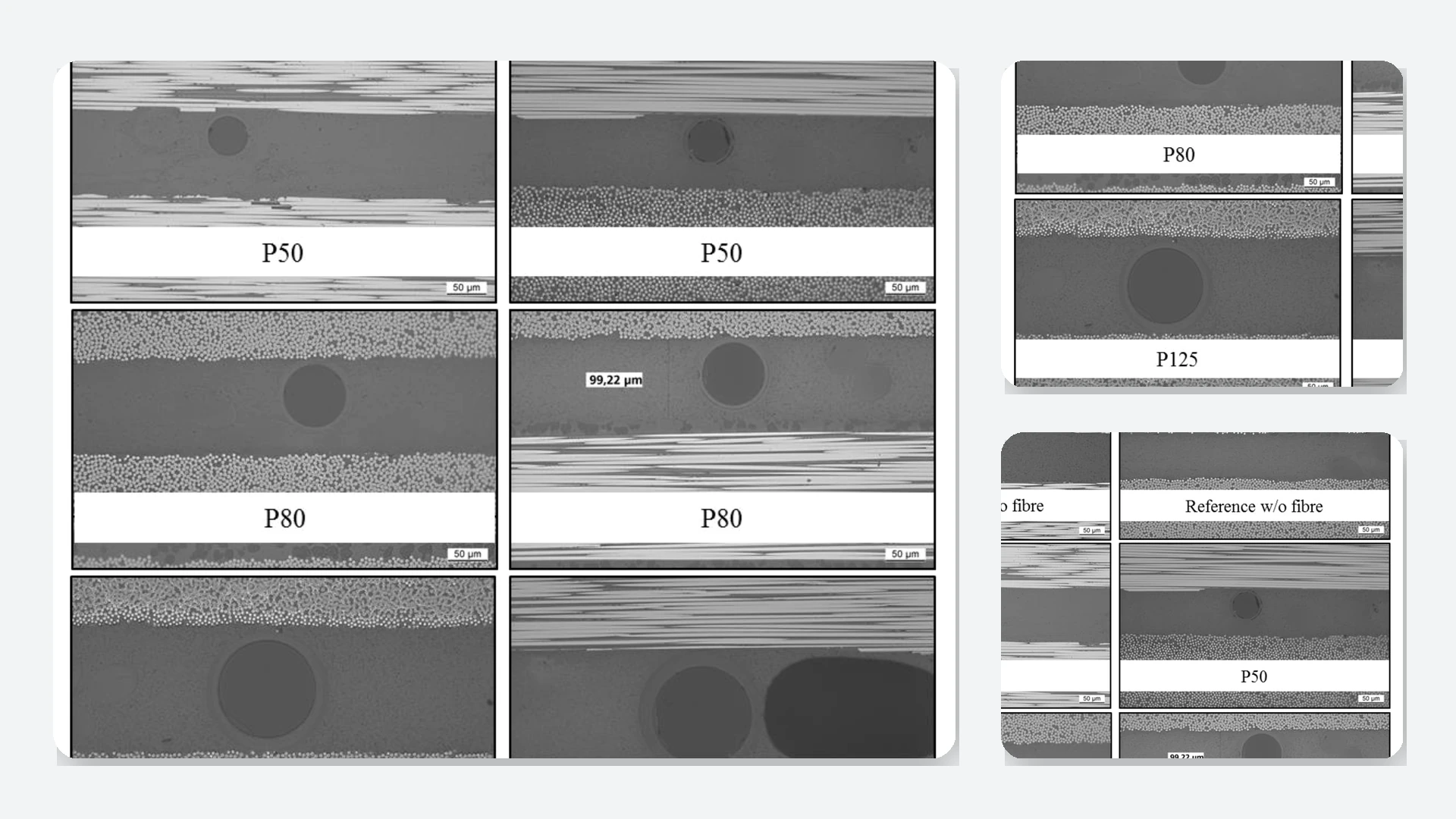
Illustrative laminate-edge detail used to discuss fabrication and thickness considerations. It does not establish a project-specific layup, tolerance or acceptance result.
Tool cost, revision risk and assembly quality cannot be separated from finished-part acceptance. Define these interfaces before a tool or sample becomes the de facto specification.
Define split lines, removal/draft logic, reference surfaces, tool ownership, storage, maintenance and who may approve a revision.
Identify reinforcement, resin, core, adhesive and insert requirements, plus the interface that actually carries load.
Call out trim, drill, bond, seal, coat and package operations, their datums, exposed-edge requirements and inspection responsibility.
A quality requirement is useful when it names the acceptance property, inspection or test method, and who signs it off. Not every part needs the same qualification program.
Which facilities or subcontractors perform tool-making, layup/molding, cure, trimming, joining and finishing?
What material records and revision-controlled process specifications apply to the offered part?
What evidence establishes dimensional condition after cure and after secondary operations?
What defect and appearance criteria can be agreed for cosmetic and functional areas?
What coupon, process qualification or non-destructive evaluation is justified by the end-use risk?
How are deviations, material substitutions and production changes submitted for approval?
CFRPWorks has not published independently approved evidence on this page for individual curing equipment, process envelopes, quality certifications or measured laminate performance. Treat those items as supplier-qualification questions, not assumptions.
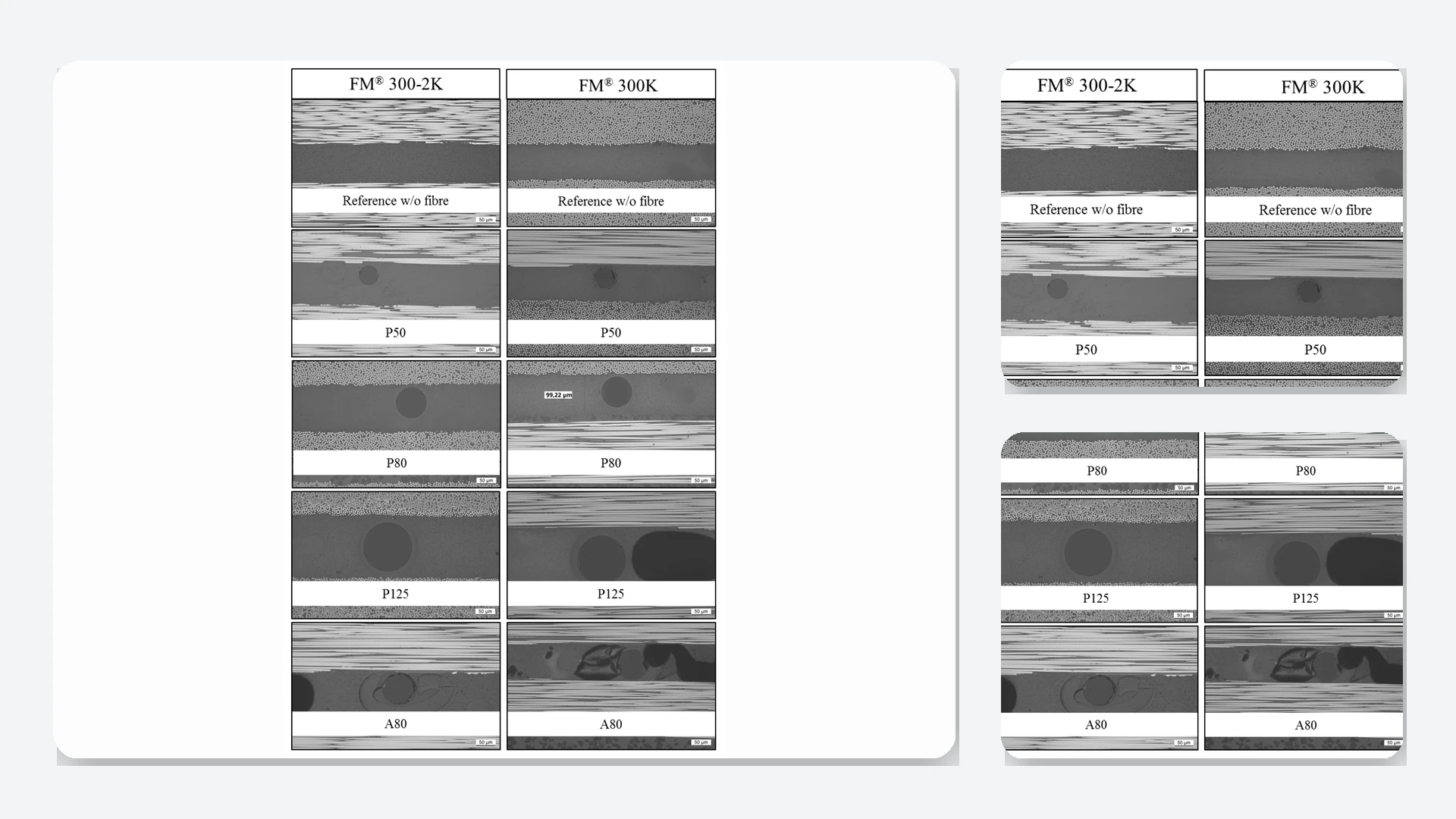
Illustrative composite bondline cross-section used to discuss fabrication and qualification questions. It does not represent a project-specific layup, result or acceptance record.
Separate the part design, manufacturing-development work and recurring production supply. A tooling quotation is not automatically a recurring-part quotation, and a shape sample is not automatically a production-qualified part.
2D drawing and model, revision, datum scheme and major interfaces.
Loads, use conditions, safety or qualification requirements that affect acceptance.
Controlled grade or performance target, face class and permissible visible defects.
Who supplies and owns tools, revision authority, storage policy and expected tool-life requirement.
Trim, drill, insert, bond, seal, coat or package operations and their owners.
Design review, candidate sample, first article and planned repeated quantities.
Dimensional report, material/process records and any other agreed test evidence.
A clear proposal should say which assumptions require buyer approval and which performance or delivery commitments still need written evidence.
Process availability: confirm the actual responsible facility and any subcontracted steps for the approved drawing.
Material + revisions: record approved substitutes, changed laminate/tool/site triggers and who can authorize them.
Tooling + supply: keep tool ownership, development work and recurring production deliverables explicit.
Regulated applications: for aerospace application requirements, the customer and responsible approval authorities determine applicable standards and evidence.
No. Fiber production creates reinforcement through a separate industrial process. Composite fabrication combines reinforcement with a matrix and forms a part or assembly.
It depends on fiber/resin selection, geometry, surface requirements, quantity, tooling budget and required evidence. The proposed route should be justified for the drawing.
A model establishes shape, but a useful quote also needs laminate or performance requirements, interfaces, tolerance/finish acceptance, quantity, tooling ownership and qualification needs.
Not necessarily. Directional reinforcement and joint behavior may require different geometry or load-path treatment, and the design authority must approve those changes.
Specify core and adhesive systems, inserts, bond preparation, joint geometry and the acceptance plan for interfaces that will be hidden after assembly.
No. Appearance does not establish the internal ply stack, resin content, void condition or part-specific strength. Use appropriate material, process and test evidence.
Send the current part or assembly definition, intended service conditions, approved material choices, approximate quantity, tooling assumptions and the acceptance documents you need. Those inputs support a scoped feasibility discussion.
Process availability, tooling ownership, qualified properties, pricing and delivery terms require explicit written confirmation before any supply commitment.
Fill out the form below, and we will be in touch shortly.